 注: 建议图片大小150px*50px
丨
English
注: 建议图片大小150px*50px 


A scissor lift is a powerful tool that provides safe and efficient access to elevated spaces. Its unique crisscrossed "X" beams allow for vertical movement, making it ideal for tasks that require straight-up-and-down mobility. In this article, we will explore the various types, uses, and safety considerations of scissor lifts. You’ll learn how they function, where they are applied, and the key factors to consider when choosing the right one for your needs.
Different power sources drive the scissor lift’s "scissor" action. Each system has its own advantages and limitations, making them suitable for various work environments and tasks. The table below highlights the efficiency, applications, and considerations for each type of system.
| Power Source | Type of System | Efficiency | Effectiveness | Applications | Considerations |
|---|---|---|---|---|---|
| Hydraulic | Hydraulic system using fluid pressure | High power efficiency, smooth operation | Ideal for heavy-duty tasks | Construction, maintenance, industrial tasks | Requires regular fluid maintenance |
| Pneumatic | Powered by compressed air | Lower power efficiency, eco-friendly | Best for controlled environments | Food processing, clean rooms | Requires air compressor availability |
| Mechanical | Mechanical linkages (manual or motorized) | Moderate efficiency | Less power for high lifts | Indoor maintenance, small tasks | Less commonly used, more labor-intensive |
Tip: When choosing the right lifting mechanism, consider the specific environment and weight capacity requirements to ensure optimal performance.
Unlike boom lifts, which offer the flexibility of both vertical and horizontal movement, scissor lifts move strictly in a vertical direction. This is ideal when working in confined spaces or where horizontal movement is unnecessary. The stability and simplicity of vertical-only lifts make them perfect for tasks like ceiling repairs, stock retrieval, and window cleaning in warehouses or buildings.
Scissor lifts come in different power configurations, each suited for specific tasks:
| Power Source | Type | Ideal Use | Key Benefits | Platform Capacity | Max Height | Efficiency | Common Applications | Considerations |
|---|---|---|---|---|---|---|---|---|
| Electric | Battery-powered | Indoor use | Zero emissions, quiet operation | 500–1,000 lbs | 19–50 feet | High, eco-friendly | Indoor maintenance, warehousing, retail | Not suitable for rough terrain or outdoor use |
| Diesel | Diesel Engine | Outdoor use, rough terrain | High power, can handle rough surfaces | 1,000–2,250 lbs | 30–59 feet | Moderate, high fuel consumption | Construction, tree trimming, outdoor maintenance | High noise, exhaust emissions, fuel cost |
| Hydraulic | Hydraulic Fluid | Industrial use | Reliable lifting power, high capacity | 1,000–2,500 lbs | 19–50 feet | High, smooth operation | Manufacturing, heavy-duty lifting, outdoor jobs | Requires regular fluid maintenance |
Choosing the right type of scissor lift depends on the task and environment. Different models offer varying power sources, height ranges, and load capacities. The following table provides a breakdown of each type's characteristics, ideal uses, and key benefits.
| Type of Scissor Lift | Power Source | Max Height | Load Capacity | Ideal Use | Key Benefits | Considerations |
|---|---|---|---|---|---|---|
| Electric Scissor Lift | Electric (Battery) | 19–50 feet | 500–1,000 lbs | Indoor tasks, light construction, warehousing | Zero emissions, quiet operation | Not suitable for rough terrain |
| Rough-Terrain Scissor Lift | Diesel or Gas | 19–53 feet | 1,000–2,250 lbs | Outdoor construction, tree trimming, power line maintenance | Heavy-duty, four-wheel drive, high load capacity | Limited maneuverability in tight spaces |
| Pneumatic Scissor Lift | Compressed Air | 10–25 feet | 500–1,000 lbs | Clean environments like food processing or laboratories | Eco-friendly, non-contaminating | Lower lift height and capacity |
| Diesel Scissor Lift | Diesel Engine | 30–59 feet | 1,000–2,250 lbs | Outdoor construction, heavy-duty tasks | High capacity, outdoor durability | High noise, exhaust emissions |
Tip: For outdoor tasks involving uneven terrain, rough-terrain scissor lifts provide better mobility and stability than standard models.
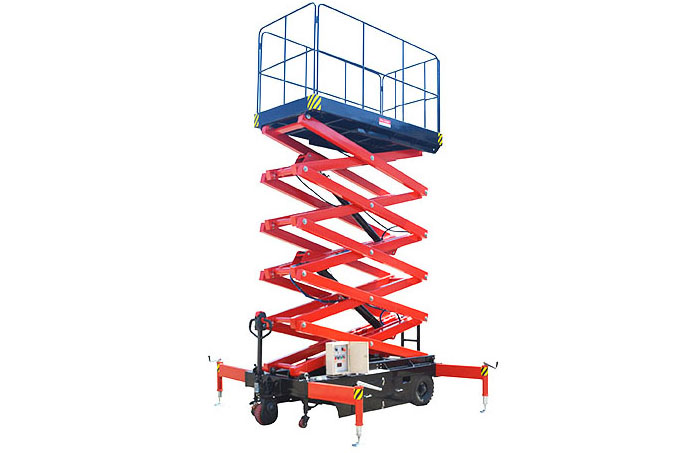
Scissor lifts are essential in construction and maintenance settings. They provide stable platforms for tasks such as:
Installing Ceiling Fixtures: Scissor lifts provide a stable and elevated platform for workers to install lights, HVAC systems, and other ceiling-mounted fixtures, reaching heights of up to 50 feet safely.
Electrical Wiring and Installation: They offer a secure platform for electrical installation work at elevated levels, reducing the risks associated with working at height.
Window Repairs: With their ability to raise workers to high windows, scissor lifts provide access for window repairs and replacements, especially in narrow spaces.
General Building Maintenance: Regular maintenance tasks, such as painting, ceiling repairs, and HVAC servicing, are made easier and safer with scissor lifts.
Compact Design for Tight Spaces: Their compact size allows scissor lifts to fit into tight indoor spaces, ensuring versatility for both small and large-scale tasks.
Rugged Outdoor Models: For rough-terrain environments, diesel-powered scissor lifts provide the durability and stability needed for construction in uneven or outdoor areas.
Scissor lifts significantly boost productivity in warehouse settings by enabling safe and efficient access to high shelves and areas. Key uses include:
Stocking Inventory: Scissor lifts allow workers to safely stock products on high shelves, improving efficiency and reducing the time spent climbing ladders.
Retrieving Products: They provide easy access to products stored at high elevations, streamlining the order fulfillment process.
Performing Facility Maintenance: Scissor lifts are ideal for tasks like changing light fixtures or installing signs in hard-to-reach places, improving maintenance efficiency.
Heavy Goods Handling: Their large platforms can support multiple workers and heavy materials, allowing for lifting and transporting bulky goods with ease.
Increased Worker Safety: By using scissor lifts, workers can avoid the risks associated with using ladders or scaffolding, reducing accidents and improving safety standards in the warehouse.
Improved Efficiency: With multiple workers on the platform, tasks such as restocking inventory or performing general maintenance can be completed faster, boosting overall warehouse productivity.
Scissor lifts are widely used in event production and filming for their ability to provide safe and stable elevated platforms. In large events, they help in setting up stages, lighting, and capturing footage from high angles. For example, a 32-foot rough-terrain scissor lift is often used at outdoor music festivals to install lighting equipment at heights of up to 40 feet. By providing easy access to elevated areas, scissor lifts significantly reduce setup time and enhance safety by allowing workers to focus on tasks without the need for scaffolding or ladders. They also prevent injuries related to falls in crowded, dynamic environments.
In the automotive sector, scissor lifts are integral for vehicle maintenance, such as tire changes, undercarriage inspections, and detailing. Their capacity to carry heavy equipment and materials allows for safer and more efficient repairs. For instance, a 40-foot diesel-powered scissor lift with a load capacity of 2,000 lbs enables workers to lift multiple vehicles at once in maintenance bays. In manufacturing, scissor lifts streamline machinery maintenance by offering a secure and stable work platform. A study by OSHA highlights that scissor lifts reduce downtime by up to 25% in manufacturing environments, as they allow workers to reach and repair machinery quickly and safely.
Scissor lifts are renowned for their stability, making them ideal for tasks that require safe, elevated platforms. Their large platforms can support up to 2,250 pounds, allowing multiple workers and heavy materials to be lifted simultaneously. This makes them particularly effective for industrial applications where heavy equipment and several workers need to be elevated at once. For example, in construction, lifts are often used to move heavy tools and materials to elevated work areas, improving workflow. Studies have shown that using stable platforms like scissor lifts significantly reduces the risk of accidents associated with lifting heavy loads, increasing productivity by up to 30% in construction environments.
When selecting a scissor lift, platform height and working reach are critical considerations. Choosing the correct lift based on task height can improve both safety and efficiency. The table below outlines the recommended use for various lift heights and their application suitability.
| Lift Model | Platform Height | Working Height | Reach | Applications | Key Considerations |
|---|---|---|---|---|---|
| Electric Scissor Lift (19–26 ft) | 19–26 feet | 25–30 feet | Vertical-only | Indoor maintenance, window cleaning, ceiling work | Limited to indoor use, low emissions |
| Rough-Terrain Scissor Lift (30–40 ft) | 30–40 feet | 40–50 feet | Vertical-only | Construction, outdoor installations | Best for uneven terrain, higher capacity |
| Rough-Terrain Scissor Lift (50+ ft) | 50–59 feet | 60–65 feet | Vertical-only | Power line maintenance, construction at great heights | More expensive, harder to maneuver |
Tip: Select a lift with a higher working height if your task requires reaching above 50 feet. Otherwise, a 30-40 foot model will suffice for most indoor and outdoor tasks.
Scissor lifts are classified by OSHA as mobile-supported scaffolds rather than aerial lifts due to their vertical-only movement. This classification means that scissor lifts must comply with OSHA’s scaffold safety standards, which include requirements for fall protection, load limits, and equipment stability. For instance, scissor lifts must have guardrails and platforms that can support multiple workers and heavy loads. According to OSHA, falls from scaffolds are one of the leading causes of construction-related fatalities, making adherence to these standards crucial for worker safety. In fact, compliance with scaffold regulations has been shown to reduce fall-related incidents by over 20% in construction projects.
Safety is a top priority when operating scissor lifts. Despite their stability, there are several potential hazards that workers may encounter. To ensure safe operation, it is crucial to follow established safety measures, conduct regular inspections, and adhere to proper usage guidelines. The table below outlines common risks and the safety precautions to mitigate them.
| Safety Measures | Effectiveness | Applications | Key Guidelines | Potential Hazards |
|---|---|---|---|---|
| Guardrails and Fall Protection | High | All applications | Always wear safety harnesses and ensure guardrails are intact before use | Falling from the platform |
| Stable Surface and Leveling | Essential for stability | Outdoor/rough terrain | Set up on firm, level ground; deploy stabilizing outriggers for rough-terrain models | Tipping over on uneven terrain |
| Proper Training | Critical for safe use | All industries | Ensure operators are trained in safe operation and follow manufacturer guidelines | Incorrect use leading to accidents |
| Terrain Inspection | Essential for safety | Outdoor/indoor use | Inspect terrain for stability, avoid obstacles, and ensure the area is free of hazards | Crushing hazards from obstacles |
| Weather Conditions (Wind) | Important for outdoor use | Outdoor applications | Avoid operating the lift in winds exceeding 28 mph | Lift instability, tipping, and accidents |
| Routine Inspections and Maintenance | High | All applications | Regularly inspect equipment for defects, check weight limits, and ensure proper storage when not in use | Equipment malfunction or unsafe conditions |
Tip: Always perform pre-use inspections, particularly when working outdoors. Ensure the terrain is stable and free of obstacles to prevent tipping or crushing hazards.
When selecting a scissor lift, it’s crucial to assess the required lift height based on the task at hand. Working heights typically range from 19 feet for smaller indoor tasks to 50 feet for construction and outdoor applications. Choosing the correct height ensures safety and efficiency, as using an underpowered lift can lead to unnecessary risks, while overshooting the needed height can waste resources and increase operational costs.
Platform size and load capacity are key factors in choosing a scissor lift. For tasks that require multiple workers or heavy equipment, opt for models with platforms that support 1,000–2,250 lbs. A larger platform allows for increased worker efficiency, and ample space to carry tools and materials simultaneously, reducing time spent moving between lifts. A study shows that lifts with larger platforms improve task efficiency by up to 25% in industrial settings.
Choosing the right lift for the environment is critical. For indoor use, electric-powered models are optimal due to their quiet operation and zero emissions, making them ideal for enclosed spaces such as warehouses or maintenance areas. For outdoor use, rough-terrain models equipped with diesel engines are better suited for uneven ground and outdoor construction tasks, providing the necessary power and stability to navigate challenging surfaces.
A scissor lift is essential for reaching elevated areas in industries like construction, maintenance, and warehousing. Its stable, large platform supports up to 2,250 pounds, making it ideal for heavy tasks. Whether for indoor or outdoor use, it provides safe, vertical-only movement, enhancing efficiency. Shenxi Machinery Co., Ltd. offers high-quality scissor lifts that ensure safety and efficiency in your workplace. Their products are designed to meet the diverse needs of various industries, providing durability and stability for any task at height.
A: A scissor lift is an elevated work platform that uses a crisscrossed "X" pattern to lift the platform vertically. It's commonly used in industries like construction, maintenance, and warehousing.
A: A scissor lift works by using hydraulic, pneumatic, or mechanical systems to extend crisscrossed beams, lifting the platform. It provides vertical-only movement, ideal for confined spaces and tasks requiring height without horizontal reach.
A: Scissor lifts offer several benefits, including stability, large platform capacity (up to 2,250 lbs), and efficient vertical movement. They enhance safety and productivity in tasks like ceiling repairs and stock retrieval.
A: Unlike boom lifts, scissor lifts only move vertically, making them ideal for tasks in confined spaces where horizontal reach is unnecessary. They also provide better stability and are easier to maneuver in tight areas.
A: The cost of a scissor lift varies based on size, power source, and height range. Generally, prices range from $5,000 for small electric models to over $30,000 for larger, rugged diesel models with high capacities.
A: Yes, scissor lifts can be used outdoors, especially models designed for rough terrain. These lifts are equipped with durable tires and a higher lifting capacity, making them ideal for construction and outdoor maintenance tasks.
A: Regular maintenance of a scissor lift includes checking for hydraulic leaks, inspecting safety features like guardrails, and ensuring the platform is free of damage. Always follow manufacturer guidelines for safety and proper use.


