 注: 建议图片大小150px*50px
丨
English
注: 建议图片大小150px*50px 


Views: 0 Author: Site Editor Publish Time: 2026-08-05 Origin: Site


Inefficient vertical transportation on large-scale construction sites creates severe operational bottlenecks. Delays in moving personnel and materials directly compound labor costs and extend project timelines significantly. Specifying an underpowered or non-compliant lifting system introduces massive financial and safety risks. Harsh industrial environments demand robust, perfectly matched equipment. Choosing the wrong system leads to frequent breakdowns and dangerous working conditions. You need a reliable, high-uptime lifting solution to keep critical path schedules on track. This requires a systematic evaluation framework. You must assess site requirements, payload dynamics, and strict compliance standards before making a decision. This guide breaks down exactly how to evaluate and select the right industrial elevator for your specific project. You will learn how to calculate peak load demands, compare drive mechanisms, and mitigate implementation risks.
Evaluating foundation requirements is the first critical step in elevator selection. You must verify the structural integrity of the host building, concrete slab, or scaffolding. These structures must safely support mast tie-ins and the total vertical load. Engineers must calculate maximum tie-in intervals and exact anchor forces. Structural reactions on the host structure dictate the mast configuration. If you are tying into a post-tensioned concrete slab, you must locate the tendons before drilling anchor bolts to avoid catastrophic structural damage. Epoxy anchors or through-bolting methods are standard, but the choice depends entirely on the host material's compressive strength.
Environmental tolerance thresholds heavily influence equipment specifications. You must assess site-specific wind loads carefully. This includes both operating and out-of-service wind speeds. A hoist might operate safely at 40 mph winds but must withstand 100 mph gusts when parked out of service. Seismic zone ratings and temperature extremes also dictate material choices and safety mechanisms. Spatial constraints require careful planning. You must account for setback requirements, loading dock integration, and overhead clearances. If the site has a tight footprint, you might need to cantilever the loading platform or integrate the base enclosure directly into an existing loading bay.
| Environmental Factor | Standard Specification | Extreme Environment Modification |
|---|---|---|
| Wind Loads (Operating) | Up to 40 mph (64 km/h) | Reinforced mast sections, reduced tie-in intervals |
| Temperature Range | -10°C to 40°C | Heated control panels, specialized gearbox oil |
| Corrosion Resistance | Standard painted steel | Hot-dip galvanized masts, C5-M marine coatings |
| Seismic Activity | Standard anchoring | Dynamic dampeners, heavy-duty wall ties |
Mapping out daily usage peaks prevents site congestion. You must calculate traffic during morning shift changes and midday lunch rotations. Compare this against the continuous material feeding required for construction. This mathematical framework ensures your lifting solution handles maximum capacity without delays. If you have 300 workers needing to reach the 20th floor in a 30-minute window, a single standard hoist will fail to meet the demand. You must calculate the exact number of trips required, factoring in the cabin capacity and the round-trip time.
Calculate the required speed and capacity to meet the project's critical path schedule. Measure speed in feet or meters per minute. Measure capacity in pounds or kilograms. You must account for practical efficiency losses in your calculations. Door open and close times, leveling speeds, and worker loading rates all reduce theoretical throughput.
Heavy-duty freight movement requires specific equipment specifications. Moving structural steel, heavy machinery components, and raw materials demands a dedicated plant material elevator. These units feature reinforced cabin floors made of anti-slip plate steel. Wider gate openings, such as single-slide or bi-parting doors, accommodate oversized loads. Continuous-duty cycle ratings ensure the equipment runs constantly without overheating. When loading heavy pallets with a forklift, the impact load on the elevator floor is massive. The structural frame must absorb this dynamic force without transferring stress to the mast rollers.
You must differentiate between heavy freight-only classifications and passenger-allowed material lifts. Freight-only lifts often have A, B, or C class loading designations. These classifications dictate how weight is distributed during loading. Class A is for general freight loaded manually or by hand trucks. Class B is for motor vehicle loading. Class C is for industrial truck loading, where the forklift itself enters the cabin. Using a freight-only lift for personnel is a severe safety violation and will result in immediate site shutdown by inspectors.
Moving human capital safely requires strict safety protocols. A factory personnel elevator provides a smoother ride and meets fully enclosed cabin standards. These features protect workers from environmental hazards and falling debris during transit. The interior must include proper lighting, emergency communication systems, and non-slip flooring. The ride quality matters because excessive vibration causes operator fatigue and damages sensitive tools carried by the crew.
Capacity planning is vital for high-volume shift changes. Multi-story industrial builds, petrochemical facilities, and power generation plants experience massive personnel surges. The elevator must accommodate these surges quickly to maintain site productivity. Proper sizing prevents workers from waiting in long queues at the ground level. A twin-cabin configuration is often the best solution for high-population sites, allowing one car to load at the ground while the other unloads at the top deck.
Rack and pinion systems offer excellent versatility for busy sites. They accommodate both personnel and materials on a single mast. This dual-purpose capability streamlines site logistics and reduces equipment footprints. You can load drywall and framing studs during the day, and transport the finishing crews during shift changes. However, you must evaluate the mechanical trade-offs carefully.
Speed restrictions and cabin dimensions often differ from dedicated passenger or freight lifts. Consider single versus twin-cabin mast configurations. A twin-cabin setup doubles throughput without doubling the required ground footprint. This is highly advantageous on congested construction sites where ground space is at a premium. You must ensure the foundation pad is engineered to support the dynamic loads of two fully loaded cabins operating simultaneously.
Standard vertical plumb lines do not work for every project. A custom industrial lift is engineered for unique, non-vertical paths. Inclined elevator systems serve angled structures or curved cooling towers effectively. These systems require specialized engineering to ensure safe travel along complex geometries. The guide rails must be precision-bent, and the cabin must feature a self-leveling mechanism to keep the floor horizontal regardless of the mast angle.
Deviating from standard vertical paths introduces structural and mechanical constraints. The mast, drive mechanism, and cabin leveling systems must adapt to the changing angle. Custom solutions require longer lead times but solve impossible access challenges. You will need to work closely with the manufacturer's engineering team to map out the exact travel path using 3D laser scanning of the existing structure.
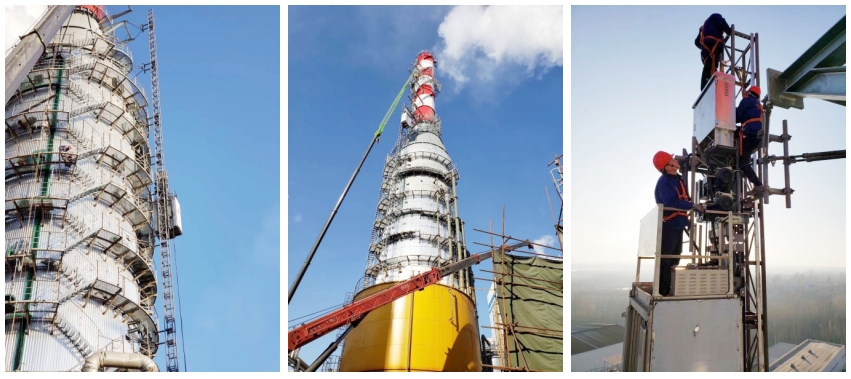
Rack and pinion systems excel in temporary construction installations. They thrive in open-air environments, extreme heights, and dirty sites. Their simple mechanical components allow for easy erection and dismantling. The gear-driven mechanism prevents slipping in wet or dusty conditions. You bolt the mast sections together, tie them to the building, and the motor drives the pinion gear directly up the rack. It is a brute-force, highly reliable method.
Traction systems use cables and counterweights. They are ideal for permanent industrial applications requiring high speeds and high lift heights. Traction elevators provide smoother, quieter travel profiles compared to rack and pinion units. Hydraulic systems are best suited for low-rise applications. They handle extremely heavy cargo capacities well. Hydraulics work best when overhead clearance is restricted and machine room space is available at the lowest level.
| System Type | Best Application | Height Limit | Maintenance Complexity |
|---|---|---|---|
| Rack and Pinion | Temporary construction, harsh outdoor sites | Virtually unlimited (tied to structure) | Low (requires regular greasing and visual checks) |
| Traction (Cable) | Permanent high-rise industrial facilities | High (limited by cable weight) | High (requires specialized rope inspections) |
| Hydraulic | Low-rise, ultra-heavy freight movement | Low (typically under 6 stories) | Medium (fluid checks, seal replacements) |
Variable Frequency Drives offer significant advantages over traditional direct-on-line motors. VFDs reduce mechanical wear on the motor and gearbox. They require a lower starting current, which is critical for sites with limited temporary power. VFDs provide precise leveling accuracy, often within five millimeters. This exact leveling is mandatory when rolling heavy carts or pallet jacks into the cabin, as a tripping hazard at the threshold causes immediate material spills.
Direct-on-line motors pull massive amperage upon startup. This can trip temporary site breakers and cause voltage drops across the site. VFDs deliver significantly smoother acceleration and deceleration. This protects delicate materials and provides a safer ride for personnel. The ramp-up and ramp-down parameters in the VFD software can be tuned specifically to the site's comfort and speed requirements.
Industrial construction sites expose equipment to harsh elements. Electrical components must meet strict IP ratings. Outdoor junction boxes and control panels require IP65 or IP66 minimum ratings to prevent water and dust ingress. Material finishes must withstand corrosive, high-dust, or marine environments. If you are building a fertilizer plant, the airborne chemicals will destroy standard painted steel within months.
Hot-dip galvanized steel masts resist rust effectively. Structural aluminum reduces overall weight while maintaining strength. C5-M marine-grade coatings are necessary for offshore or coastal construction projects. Proper weatherproofing prevents premature equipment failure. You must also ensure that all limit switches and sensors are hermetically sealed to prevent dust from causing false faults.
Safety features are non-negotiable on any lifting system. Overspeed governors detect uncontrolled descent and engage the brakes mechanically, independent of the electrical system. Mechanical interlocks on gates prevent the cabin from moving if doors are open. Progressive safety catches grip the mast securely during a free-fall event, bringing the cabin to a controlled stop rather than a violent halt. Automated overload sensing systems use load cells and audible alarms to prevent overweight travel.
Emergency rescue systems protect workers during power failures. Manual brake release mechanisms allow for controlled gravity descent. The operator pulls a lever, releasing the motor brake slightly, allowing the cabin to glide down to the next landing. Secondary lowering devices provide alternative rescue methods. Uninterrupted power supply backup systems keep communication and lighting active during emergencies, preventing panic inside the enclosed cabin.
Real-time monitoring transforms elevator maintenance. IoT diagnostics track elevator load cycles, fault codes, and door cycles. Monitoring operating hours helps schedule preventative maintenance accurately. This data prevents unexpected breakdowns and extends equipment life. Instead of guessing when to replace the pinion gear, the system alerts you based on actual travel distance and load stress.
Remote telemetry minimizes mean time to repair. Technicians can identify faulty parts remotely before arriving on site. If a door interlock fails on the 15th floor, the telemetry system pinpoints the exact switch. This eliminates diagnostic trips and gets the elevator running faster. Smart diagnostics are essential for high-uptime construction projects where every hour of downtime costs thousands of dollars in lost labor.
Standard modular hoists cannot fit every application. Retrofitting existing industrial structures often requires custom dimensions. Silos, oil refineries, and tight internal utility shafts present severe spatial constraints. A custom lift maximizes the available footprint while maintaining safety clearances. You might need a cabin that is exceptionally narrow but very deep to transport long pipes through an existing ventilation shaft.
Historic building retrofits require careful structural integration. You cannot always anchor to aging masonry. Custom engineering provides self-supporting towers or specialized tie-in brackets that distribute the load across a wider surface area. This ensures the new lift operates safely without damaging the existing structure. Core drilling through historic concrete requires ground-penetrating radar to avoid hidden steel reinforcements.
Hazardous locations demand specialized engineering. Class I, Division 1 or 2, and ATEX zones require explosion-proof ratings. You must specify spark-resistant components and explosion-proof motors. Pressurized control enclosures prevent combustible gases from reaching electrical contacts. Even the guide rollers must be made of non-sparking materials like specialized bronze or heavy-duty polymers.
Specialized industrial payloads also dictate custom designs. Transporting long materials like pipe bundles or structural beams requires elongated cabins or roof hatches. Cleanroom compatibility in pharmaceutical or semiconductor plants requires stainless steel finishes and particulate-free operation. The hoist must not shed any dust from its braking system or guide rollers into the clean environment.
Failed inspections cause massive project delays. Incorrect submittals halt installation immediately. You must adhere strictly to local municipal codes and national standards. OSHA 1926.552 governs temporary construction hoists. ANSI A10.4 applies specifically to personnel hoists. You must submit detailed engineering drawings stamped by a professional engineer registered in that specific state or province.
Permanent installations require compliance with ASME A17.1 or CSA B44. Navigating these jurisdictions requires experienced engineering partners. Ensure all documentation, load tests, and safety certifications are prepared well before the inspector arrives. A drop test must be performed on-site, fully loaded, to prove the overspeed governor functions correctly. If this test fails, the hoist cannot be used.
Logistical risks threaten erection timelines. Delayed concrete base pad curing prevents mast installation. Improper mast alignment causes severe wear on the rack and pinion gears. You must coordinate heavy lifts carefully with mobile crane operators during initial installation and subsequent mast jumps. The base pad must be perfectly level; a deviation of just a few degrees at the base translates to massive misalignment 300 feet in the air.
Site access for delivery trucks must be planned meticulously. Staging areas for mast sections and cabin components must be clear of other construction activities. Proper logistical planning ensures the elevator goes up safely and on schedule. You must sequence the delivery of mast sections to match the erection speed, avoiding site clutter.
User-error accidents and equipment abuse destroy productivity. Rigorous, documented operator training is mandatory. Only certified personnel should operate the equipment. Daily pre-shift safety inspection checklists mitigate risks before the lift operates. The operator must check the drop test tag, verify door interlocks, and listen for abnormal gearbox noises.
Handover protocols must include physical demonstrations of emergency rescue procedures. Operators must know how to perform a manual gravity descent safely without burning out the brake pads. Clear communication protocols between the operator and loading crews prevent accidents. Hand signals and radio communication must be standardized across the site.
Selecting the optimal vertical transportation system requires balancing peak load capacity, environmental durability, and strict code compliance. A systematic approach prevents costly delays and dangerous site conditions. Follow these actionable steps to secure the right equipment for your project:
A: Commercial elevators prioritize aesthetics, smooth rides, and passenger comfort in office or residential buildings. Industrial elevators are built for rugged environments, focusing on heavy load capacities, continuous duty cycles, and resistance to harsh weather, dust, and corrosive materials.
A: Standard capacities typically range from 2,000 to 10,000 pounds. However, heavy-duty industrial models can be engineered to carry in excess of 20,000 pounds, depending on the mast configuration, foundation strength, and drive system.
A: In the United States, temporary personnel hoists must comply with OSHA 1926.552 and ANSI A10.4. Permanent installations must adhere to ASME A17.1. Local municipal codes and specific industry standards for hazardous areas may also apply.
A: Engineering and manufacturing a custom lift typically takes 12 to 24 weeks, depending on complexity and explosion-proof requirements. Site installation, tie-in engineering, and testing usually add an additional 2 to 4 weeks to the timeline.
A: Yes, dual-purpose rack and pinion hoists are specifically designed and certified to carry both personnel and materials. However, dedicated freight-only material lifts cannot legally transport personnel under any circumstances.
A: With rigorous preventative maintenance and proper operation, a high-quality rack and pinion hoist can last 15 to 25 years. Components like pinions, guide rollers, and brakes will require periodic replacement during this lifespan.
A: VFDs regulate the power supplied to the motor, resulting in lower starting currents, smoother acceleration, and precise leveling. This reduces mechanical wear on the gearbox and prevents power surges on the site's temporary electrical grid.


