 注: 建议图片大小150px*50px
丨
English
注: 建议图片大小150px*50px 


Views: 273 Author: Site Editor Publish Time: 2025-10-31 Origin: Site


Construction sites often require the use of specialized equipment for lifting and transporting heavy materials. Two of the most commonly used tools for this purpose are material hoists and cranes. While both serve the purpose of moving materials vertically, they differ significantly in their design, functionality, and application. Understanding the differences between a material hoist and a crane can help contractors and project managers make informed decisions about which equipment is best suited for a particular task. This article will delve into the specifics of these two machines, comparing their design, functionality, advantages, and ideal use cases.
A material hoist is a type of lifting equipment designed specifically for the vertical transportation of heavy loads, typically building materials, to higher floors of a construction site. It consists of a platform that can be raised and lowered along a vertical track, typically powered by an electric motor or hydraulics. Material hoists are commonly used in high-rise building construction, where materials such as bricks, concrete, or tools need to be moved from ground level to upper levels.
A crane, on the other hand, is a large, mobile or fixed machine used for lifting, lowering, and moving heavy materials across horizontal distances. Cranes have a variety of designs, including tower cranes, mobile cranes, and overhead cranes, each suited to specific tasks. Cranes typically use a hoist system to lift loads, but they also have the ability to move these loads horizontally, giving them much greater flexibility than a material hoist.
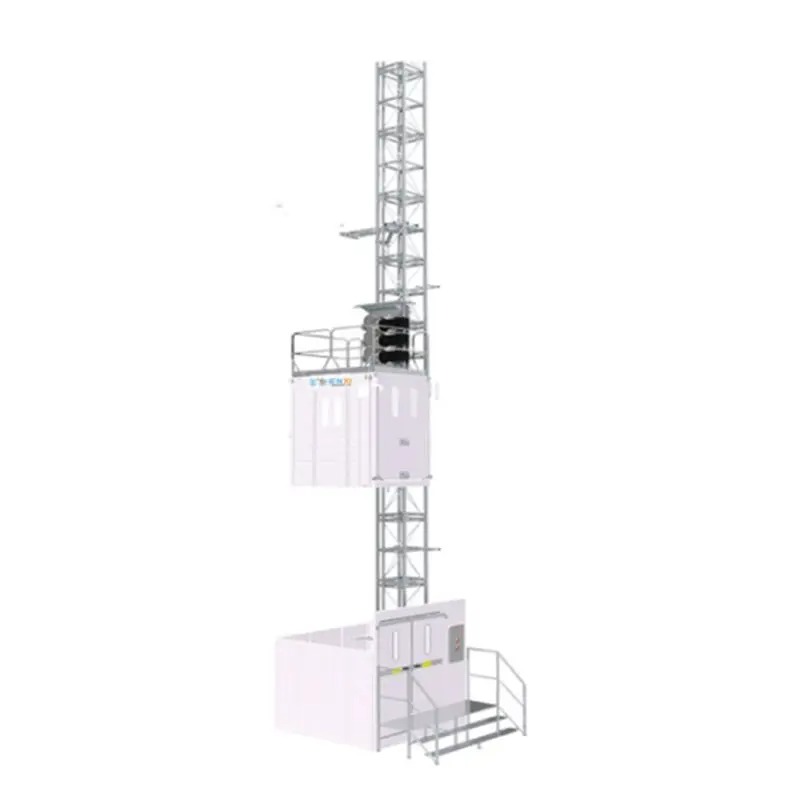
The primary function of a material hoist is vertical transport. The hoist system moves a platform up and down along a set of rails or a vertical shaft, with a maximum height depending on the model. This limited motion makes material hoists ideal for transporting materials vertically within confined spaces, such as multi-story buildings under construction.
Unlike material hoists, cranes are capable of both vertical and horizontal movement. Cranes can lift and move heavy materials to various points across a construction site, making them more versatile than material hoists. Whether it’s moving steel beams or hoisting large equipment, cranes can navigate obstacles and change direction to transport materials to the desired location.
Material hoists are typically simpler in design compared to cranes. They consist of a hoisting mechanism (often an electric or hydraulic motor), a platform, and vertical tracks or rails. The platform is securely attached to cables or chains and can be raised or lowered with minimal horizontal movement. This streamlined design is optimized for space efficiency and ease of installation in tall buildings.
Cranes are much more complex in design. They feature a base or tower, an arm (or jib) that extends to reach out over a work area, and a hoisting system capable of moving materials vertically and horizontally. Cranes are often built to withstand extreme weather conditions and heavy loads, and their structure must be capable of both lifting and moving large, heavy objects over a distance.
Material hoists typically have a lower load capacity compared to cranes. Most models are designed to carry relatively smaller loads, typically ranging from 500 kg to 3,000 kg, depending on the type. The main purpose of a material hoist is to transport building materials, tools, and equipment that are relatively lightweight but require high vertical elevation.
Cranes, however, are designed to handle significantly heavier loads. Depending on the type of crane, the load capacity can range from a few tons to several hundred tons. Cranes also have a much greater horizontal reach, allowing them to move materials across long distances on a site. Some cranes, such as tower cranes, have an outreach of over 70 meters, while others, like mobile cranes, are designed for portability and flexibility.
Material hoists are designed with safety features like emergency brakes, limit switches, and safety barriers to protect workers from accidents. Since hoists are typically stationary, they are considered safer in terms of movement control. However, workers must still follow strict guidelines to prevent overloading and ensure proper operation of the equipment.
Cranes, due to their ability to move both vertically and horizontally, present more complex safety challenges. The risk of swinging loads, tipping, or failure of components under heavy load requires constant supervision. Cranes are often equipped with sophisticated safety systems, including load sensors, anti-collision devices, and automatic overload protection. Additionally, cranes require trained operators with specialized certifications to ensure safe operation.
Material hoists are generally easier and quicker to install than cranes. They typically require minimal setup, with the main task being the installation of the vertical tracks. Material hoists can often be installed in less than a day, making them ideal for fast-paced construction projects.
Cranes, especially large tower cranes, require a more involved installation process, often taking several days to assemble. The installation includes erecting the tower, setting up the arm, and calibrating the hoist system. Due to their complexity and the heavy-duty nature of their components, cranes also require more regular maintenance. This includes checking for wear and tear on components like cables, hydraulic systems, and the base structure, as well as periodic safety inspections.
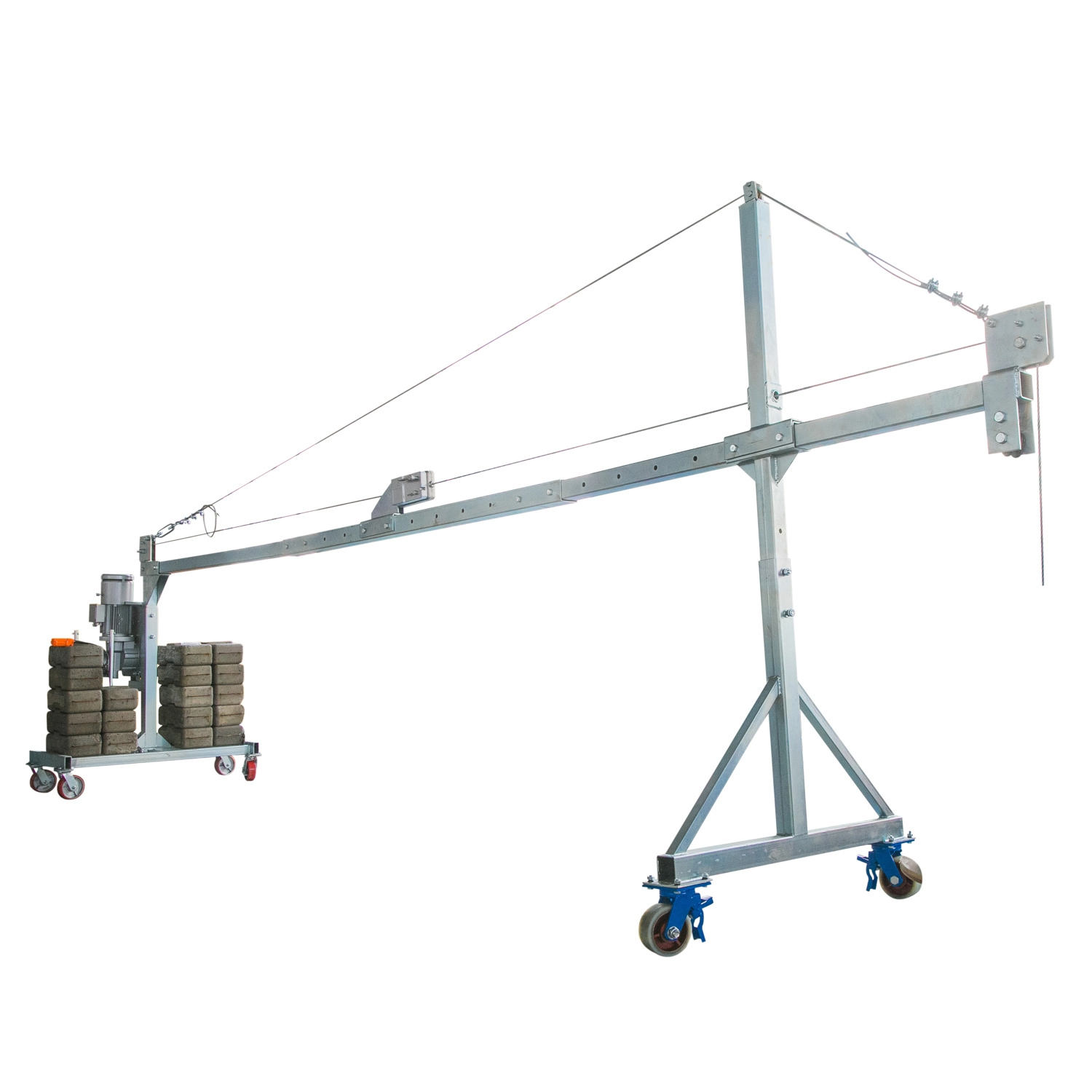
Material hoists are best suited for tasks that require transporting materials vertically within a confined area. They are frequently used in the construction of multi-story buildings, where materials such as concrete, drywall, and bricks need to be lifted from ground level to upper floors. Material hoists excel in environments where vertical movement is paramount, and horizontal transportation is not necessary.
Cranes are more versatile and are often used for tasks that require both vertical and horizontal movement. They are ideal for lifting heavy machinery, large beams, and even entire structures. Cranes are essential in large-scale construction projects, particularly in building tall structures or moving materials across long distances on a site. Their ability to reach across obstacles and move materials over a wider area makes them indispensable for large construction projects.
While material hoists and cranes both play critical roles in construction, their functionalities, designs, and applications are distinct. Material hoists are specialized for vertical lifting within confined spaces, offering a cost-effective solution for transporting building materials. Cranes, on the other hand, provide greater versatility with their ability to move materials both vertically and horizontally, making them indispensable for large-scale projects. When choosing between these two machines, it’s essential to evaluate the specific needs of the construction site—whether vertical-only transport or broader mobility is required.
1. Can a material hoist be used for heavy machinery?
No, material hoists are typically designed for lighter loads, such as building materials and tools. For heavy machinery, cranes are the more suitable option due to their higher load capacities.
2. Are material hoists safer than cranes?
Material hoists are often considered safer due to their stationary nature and simpler operation. However, cranes are also equipped with numerous safety features and require certified operators to ensure safe operation.
3. How long does it take to install a material hoist?
Material hoists are relatively easy to install and typically require one day or less for setup, depending on the complexity of the system.
4. Can cranes be used for vertical-only transportation?
While cranes can certainly perform vertical lifts, their real strength lies in their ability to move materials horizontally as well. For purely vertical transportation, a material hoist is generally more efficient.
5. What are the main advantages of using a material hoist?
The main advantages of a material hoist include its simplicity, cost-effectiveness, and efficiency for vertical transportation in confined spaces. They are especially useful in multi-story building construction where horizontal movement is unnecessary.


